

Every new client onboarding, every new release, every new audit — the same
shape, rebuilt by hand each time. A template captures that shape once: the
Structure, the Starter issues with dates relative to a start day you choose,
the Members, and the configuration of other features that project used. New
projects start from the gallery instead of from an empty form.
A template is a stored definition, not a live project. That is the whole difference from copying: it keeps working after the project it came from is renamed, archived or deleted, because everything in it is recorded by name.
On RedminePRO Cloud
Availability
Business and above.
Turn it on
Nothing per project. Grant the permissions below, and the gallery appears when someone creates a project.
Permissions
Administration → Roles and permissions, in the Project Templates section:
| Permission | What it grants |
|---|---|
Create projects from templates |
Start a new project from the gallery |
Manage project templates |
Create, edit and delete templates, and save a project as one |
Creating a project still needs Redmine's own right to create one — this grants the use of a template, never the ability to make projects.
Settings
None workspace-wide. Templates themselves live at Administration →
Project templates.
Using it
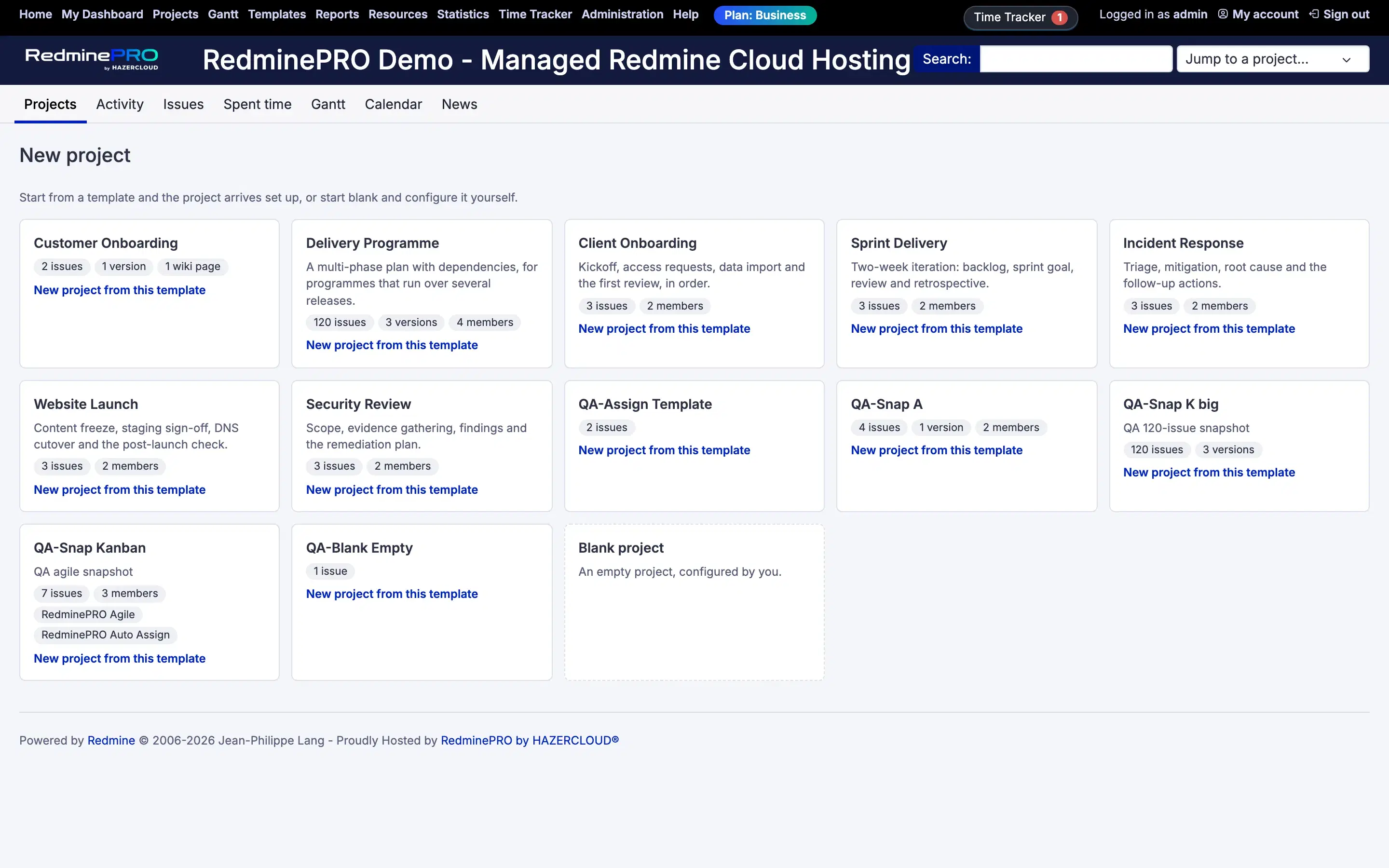
- Create a project. The gallery offers the templates you may use, each showing
its
Contentsand how manyProjects createdit has produced. - Choose one, name the project, and pick the start date. Day zero is that date,
so
Start (day)andDue (day)on each starter issue land relative to it. - Fill in any
Role placeholders— a template says "Project Manager" rather than naming a person, and you choose who that is at creation. A placeholder markedRequiredmust be filled. - Create. The project, its structure, its wiki and its members are made in one step; the starter issues follow.
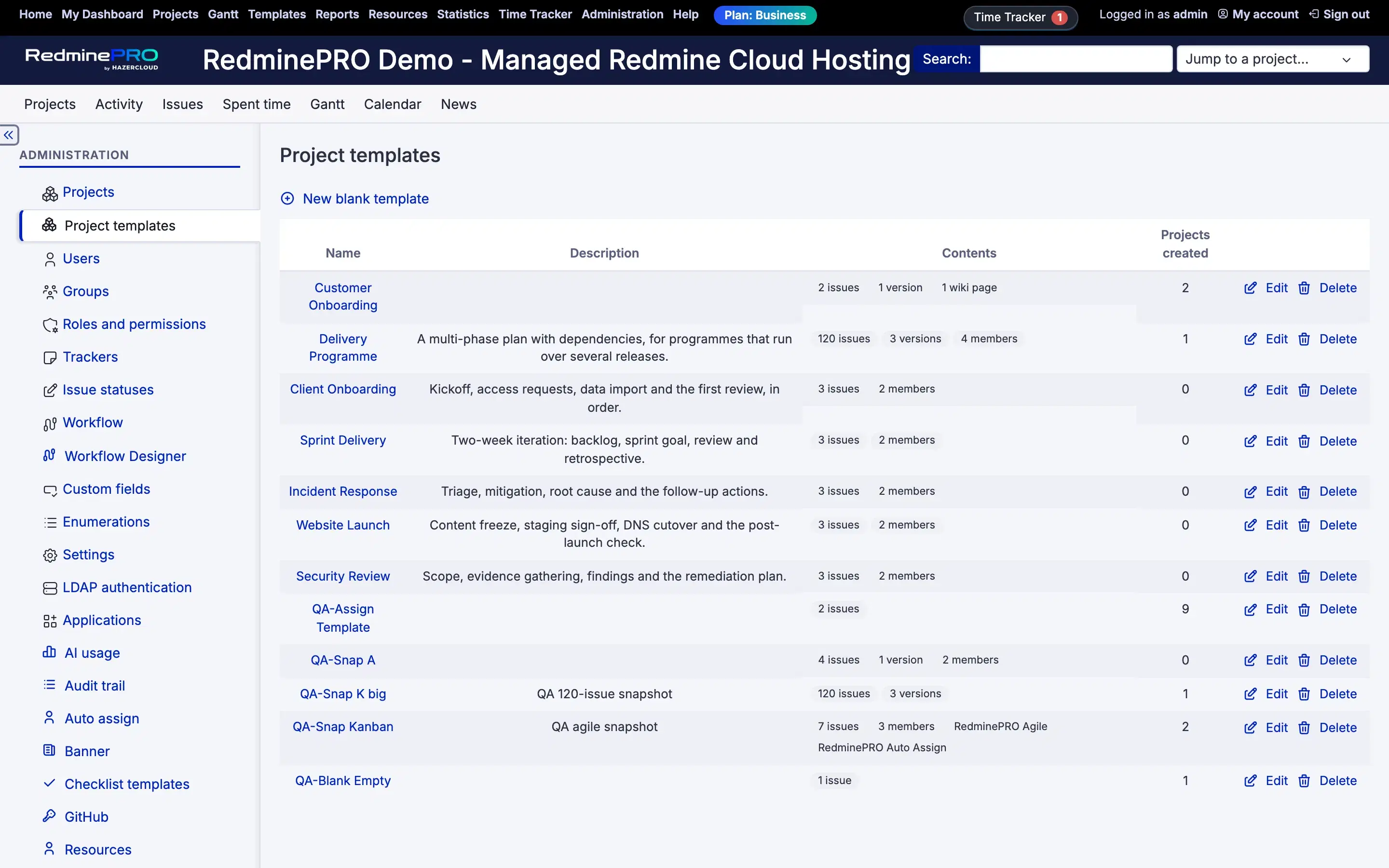
Making a template. Either New template from scratch, or save an existing
project as one — which captures its structure, members, starter issues and the
configuration of the other features it uses, listed under
Plugin settings carried.
If something a template refers to no longer exists — a tracker that was deleted, a person who left — creation skips that item with a warning rather than failing. Three stale issues cost three issues, not the project.
Troubleshooting
No gallery when creating a project. The account lacks
Create projects from templates, or no template exists yet.
A template is not offered. Templates can be restricted; check the template's own configuration and the account's permission.
Some starter issues are missing. They referred to something that no longer exists — a deleted tracker, status or person — and were skipped with a warning so the rest of the project still got made.
The dates are wrong. They are relative to the start date chosen at creation,
not absolute. Start (day) and Due (day) count from day zero.
A placeholder had nobody to choose. The people offered are those who could hold that role. Add them to the workspace first, or leave an optional placeholder empty.
Changing a template altered an existing project. It cannot. A template is a definition used at creation; projects made from it are independent afterwards.